Help
[1] Overview
[2]
Browse
[3] Search
[4] High-throughput
[5] Drug Discovery
[6] Download
[7]
Contact
[1] Overview
Protein-coding RNAs refer to RNAs that
encode proteins. This kind of RNAs control various biological
functions to maintain morphology and functions of tissues, whose
dysfunction often influences cancer development. Accumulating
researches have proven that cancers related drugs can target
protein-coding RNAs. In addition, protein-coding RNAs may play
critical roles in drug resistance. These researches produced
substantial data such as literatures and high-throughput microarray
which were hard to be screened out by researchers. To collect and
annotate these data, we developed DREAM database, a comprehensive
manually curated database including protein-coding RNAs and drug
targets or drug sensitivity associations. Current version contains
1601 scientific literatures and 195 high-throughput microarray
data. Each entry in DREAM database contains detailed information on
RNAs, drug, cancer, and other information.
The overview
of the database is as followings:
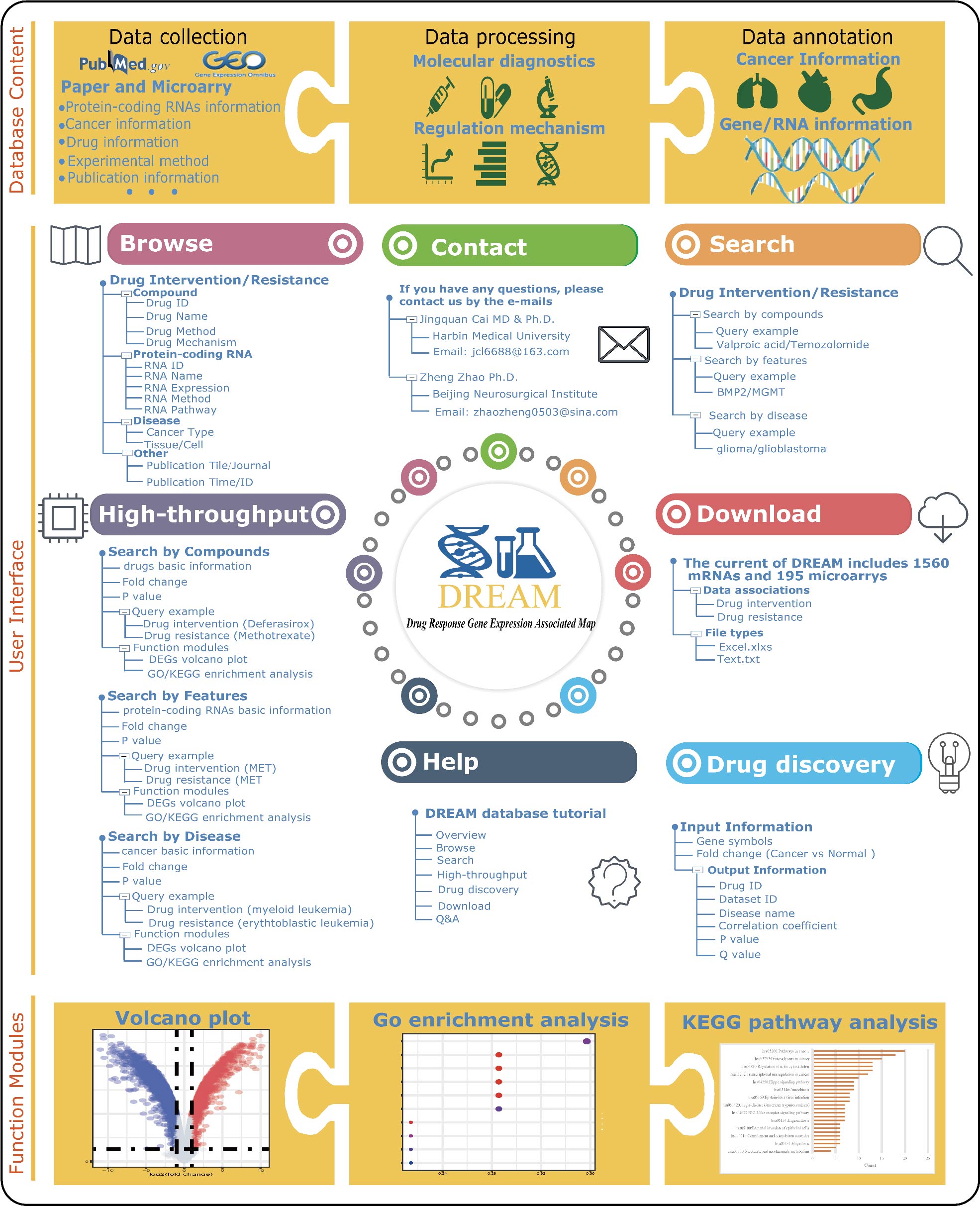
Figure 1. The overview of the DREAM database.
[2] Browse
To browse protein-coding RNAs and cancer
drugs association data in the database, please click the menu
"Browse". All the data were divided into two parts called ‘Drug
intervention’ and ‘Drug resistance’. Users can browse all entries
in three ways: by compound name, by gene name, or by disease name.
In ‘Drug intervention’ part, take a browse "glioma"-related
protein-coding RNAs and drugs as an example. To browse the entries
for glioma, please click "Disease name" and select the "glioma"
option. The browse result will be displayed in the right panel as
presented in Figure 2A. In ‘Drug resistance’ part, take a browse
"cisplatin"-related protein-coding RNAs and cancers as an example.
To browse the entries for cisplatin, please click "Compound name"
and select the "cisplatin" option. The browse result wilsl be
displayed in the right panel as presented in Figure 2B.
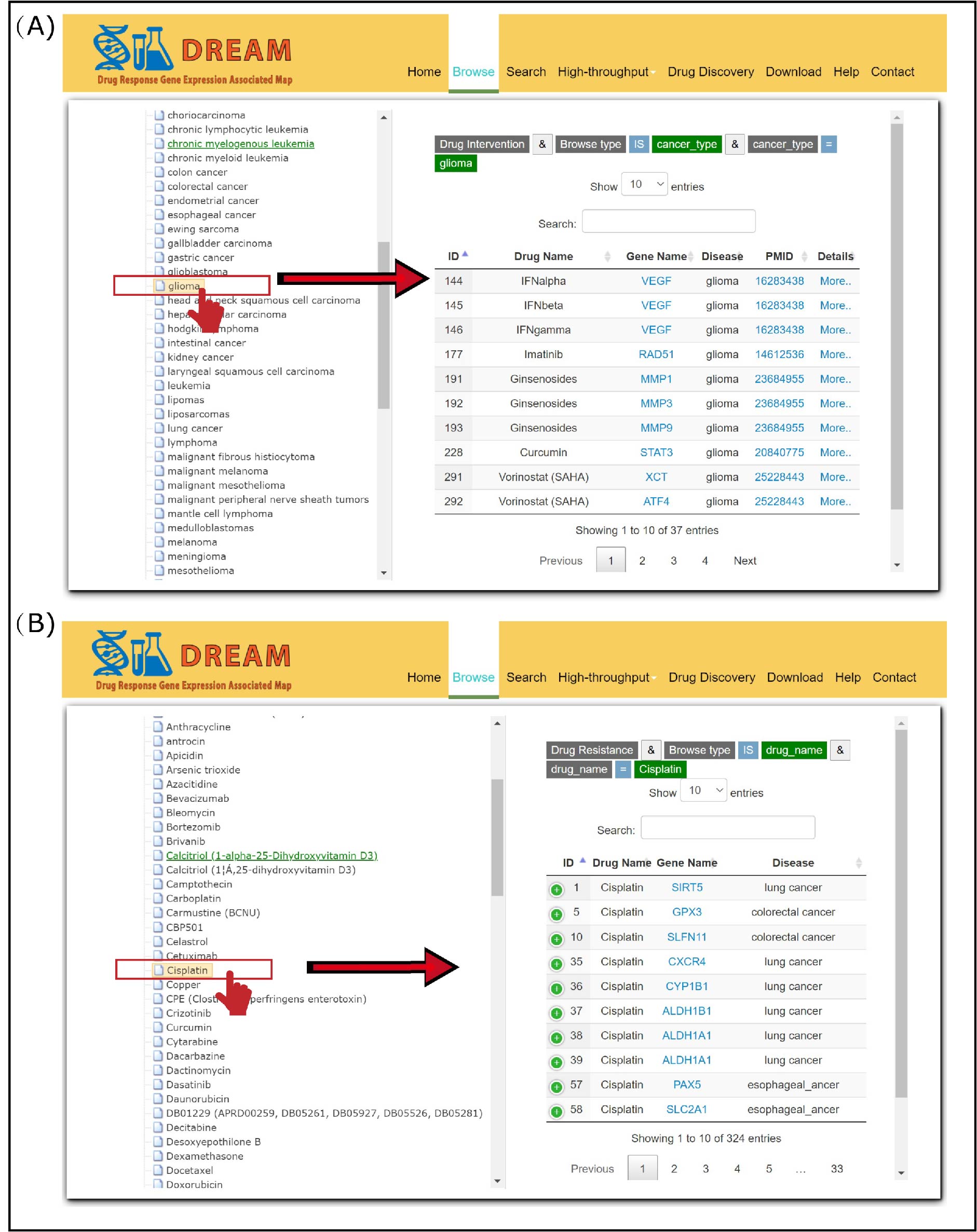
Figure 2. The browse interface of the DREAM database.
[3] Search
DREAM database provides a fuzzy search
function. To search data in the database, please click the menu
"Search". Users can search all entries in three ways: search by
compound, or/and search by feature, or/and search by disease. The
‘Search’ page is displayed in Figure 3.
1. choose drug
intervention search or drug resistance search;
2. Input
the interested drugs, protein-coding RNAs, or disease for search.
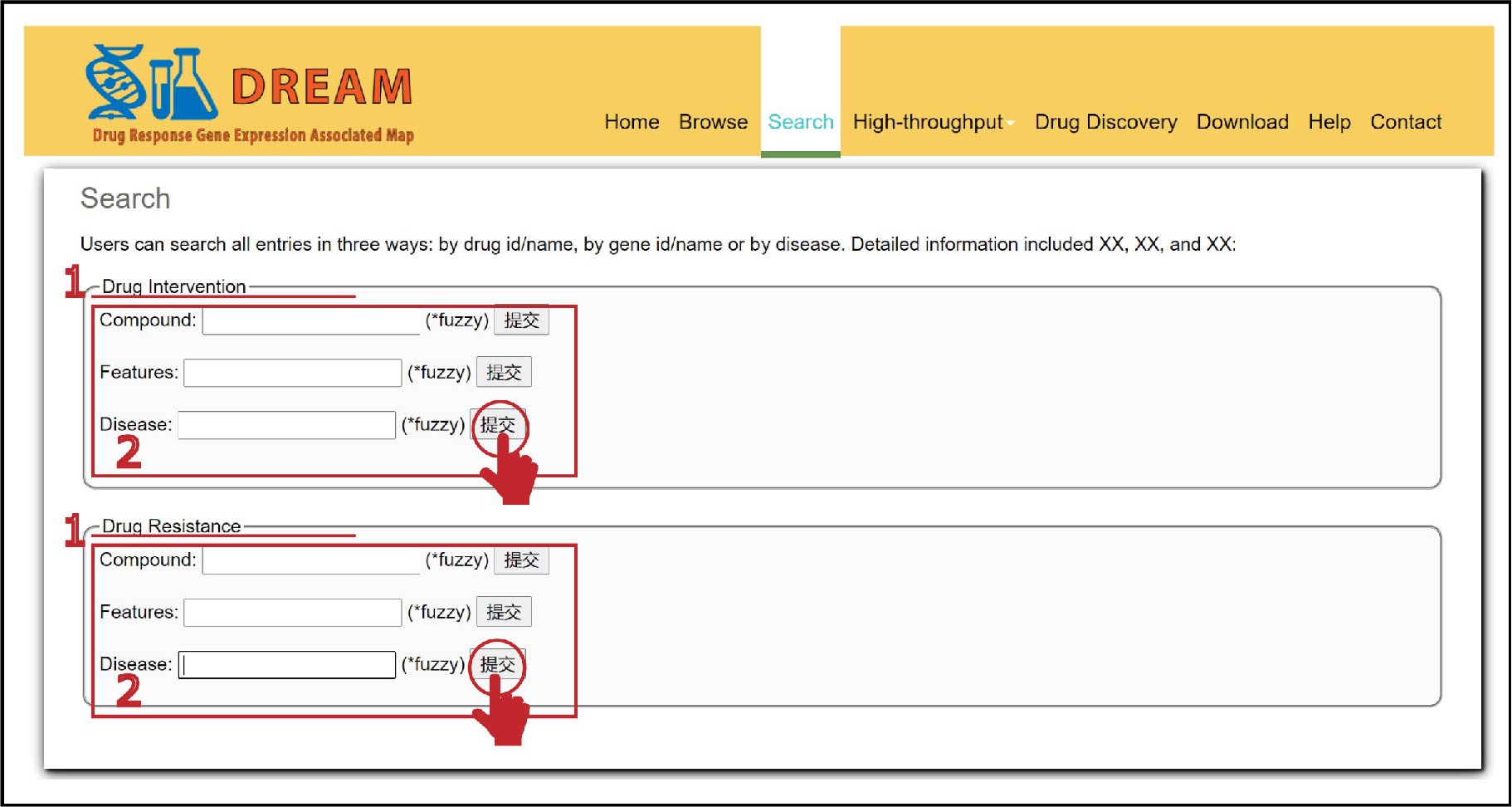
Figure 3. The search interface of the DREAM database.
[4] High-throughput
The current version of DREAM
database contains 195 high-throughput microarray data across 36
cancer subtypes, including 94 protein-coding RNAs and drug
intervention associations microarray data and 101 protein-coding
RNAs and drug resistance associations microarray data. To browse
and search theses data in our database, please click the menu
"High-throughput". We provide three search methods: search by
compound, search by feature, or search by disease. In addition, we
also offer user an interactive visualization tool such as volcano
plot and gene enrichment analysis such as GO annotations and KEGG
pathways analysis. The ‘High-throughput’ page is displayed in
Figure 4 taking ‘temozolomide’ as an example.
1.Click to
choose search by compound;
2.Input user’s interested drug
‘temozolomide’ and set special cut-off value such as ‘fold
change>2’ and ‘p value< 0.05’;
3. Detailed information
returns in search results;
4. Click to perform function
analysis.
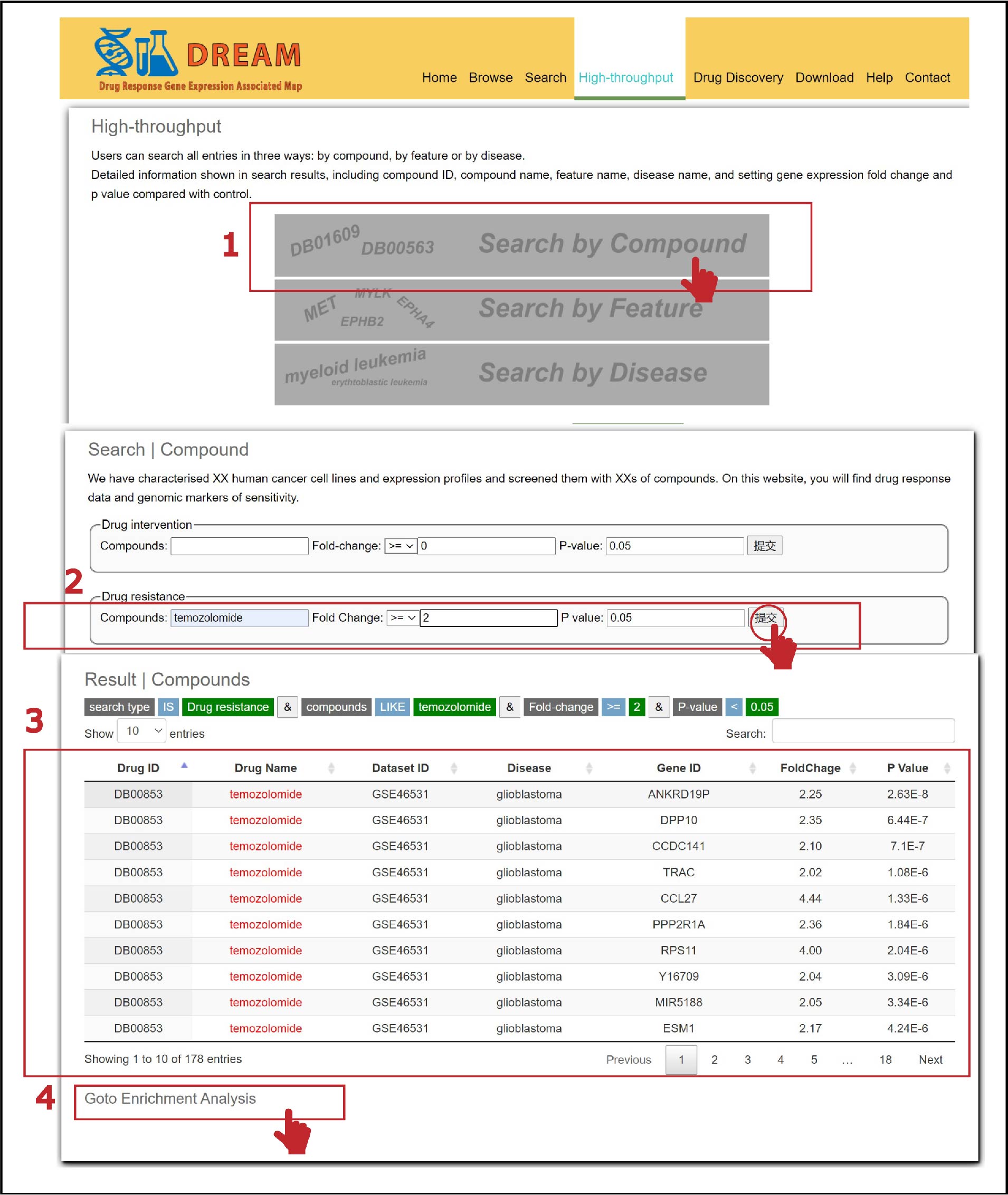
Figure 4. The high-throughput interface of the DREAM
database.
[5] Drug Discovery
In ‘Drug Discovery’ page, user
can calculate the correlation coefficient between the cancer gene
expression profile and the drug related gene expression profile to
repurpose and identify novel drug indications in different cancers.
Firstly, user needed to upload the cancer gene expression profile
including gene symbols and gene expression fold change (relative to
a healthy control) by themselves. Then, our database would match
and calculate the correlation coefficients based on the database
contained drug related gene expression profile. After a while, the
database would output the results including correlation
coefficient, drugs, and cancers. The ‘Drug discovery’ page is
displayed in Figure 5.
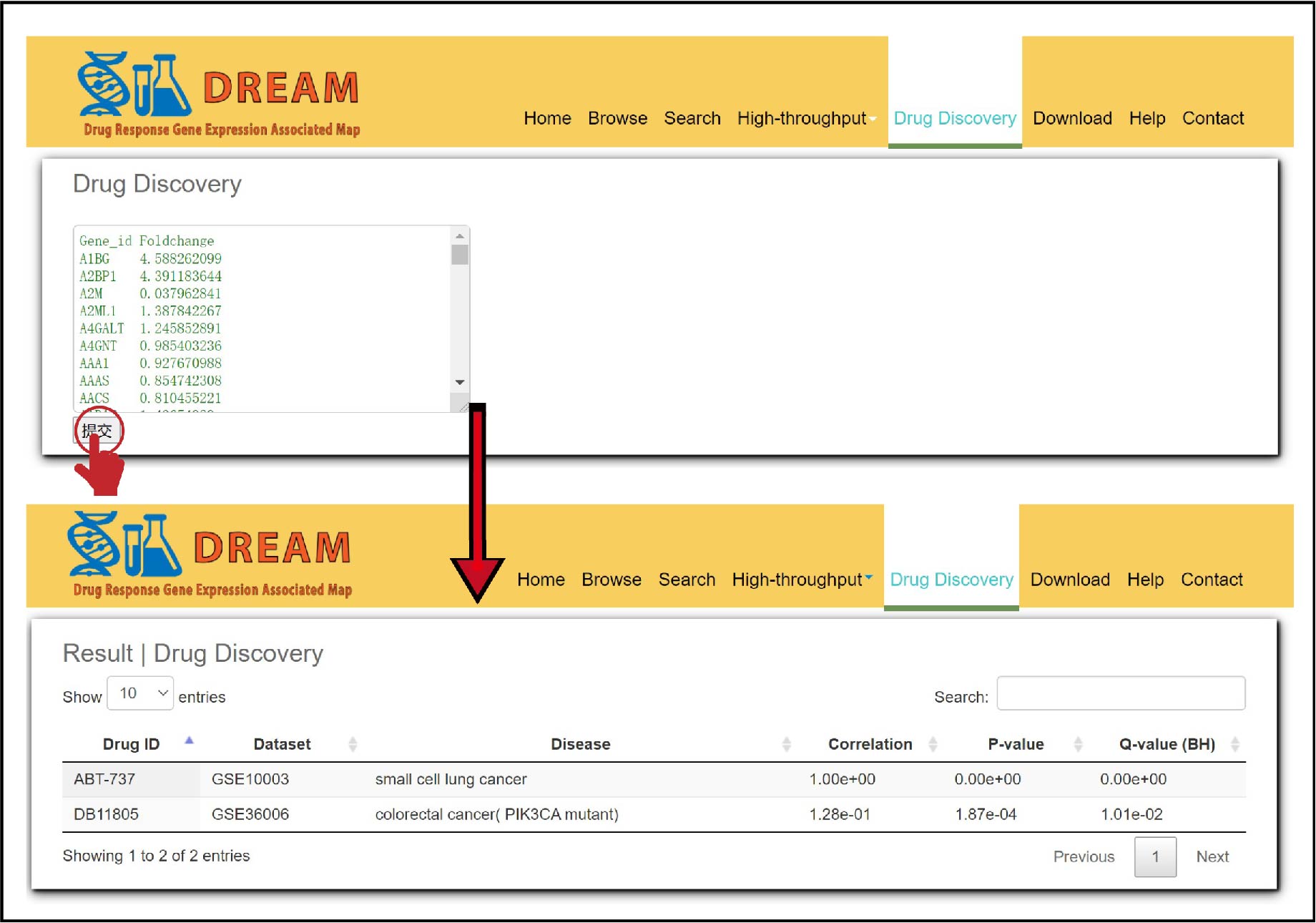
Figure
5. The drug-discovery interface of the DREAM database.
[6] Download
To download data in DREAM database,
please click the menu ‘Download’. The DREAM provides two formats of
downloadable file in TEXT and Excel formats, respectively.
[7] Contact
If you have any questions, suggestions
or comments, please contact us by e-mails. In ‘Contact’ page, there
are the details of two corresponding writers of our team.